
You are currently browsing the monthly archive for January 2012.

Thinking that you are still the same you, and you can go back to the old you if you just want to enough is like thinking you can recreate the wonderful weather from last summer. That is the trap of optimism, assuming that just because you can imagine it going well, it actually will. In reality it is just as likely to rain all summer.
Often people try to prove that they haven’t been changed by their addiction by approaching their new health and fitness program with an overly optimistic mindset. They think that getting back to fitness ‘fast’ shows that they weren’t really as stuck as it had appeared.
They begin their health and fitness program with a burst of optimistic commitment, thinking that more sessions per week will be better than fewer, more weight lifted will be better than less, more laps jogging around the track will be better than just taking a walk. What inevitably happens is a breakdown, an injury, a ‘pushback’ from their subconscious, or some external life crisis that causes a pause in the program, which soon lengthens to a full stop. Once again, stuck again.
You just can’t jump from ‘in it’ to ‘out of it’, and no leap can be made from wanting to recover, to ‘recovered’.
Plan with pessimism; approach with optimism.
Plan that you’ll need more time than you expect. Then do your best.
It really is that simple, though no way, easy.
This my excavation and today is kumran
Everything that happens from now on
This is pouring rain
This is paralyzed
I keep throwing it down two-hunded at a time
It’s hard to find it when you knew it
When your money’s gone
And you’re drunk as hell
On your back with your racks as the stacks are your load
In the back and the racks and the stacks of your load
In the back with your racks and you’re un-stacking your load
Well I’ve been twisting to the sun and the moon
I needed to replace
The fountain in the front yard is rusted out
All my love was down
In a frozen ground
There’s a black crow sitting across from me
His wiry legs are crossed
He is dangling my keys, he even fakes a toss
Whatever could it be
That has brought me to this loss?
On your back with your racks as the stacks are your load
In the back and the racks and the stacks of your load
In the back with your racks and you’re un-stacking your load
This is not the sound of a new man or crispy realization
It’s the sound of the unlocking and the lift away
Your love will be
Safe with me
Words and Music by Bon Iver
Addiction is, at its most basic level, being stuck.
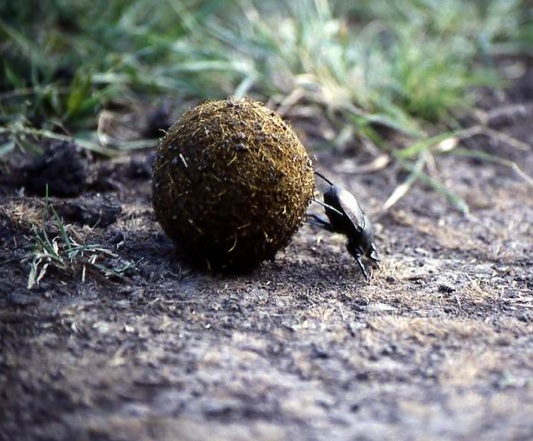
Not stuck as if in glue, but stuck in place like this guy:

Or maybe here is a more fitting representation:
The addiction has changed you chemically, physically, and psychologically, while simultaneously adding to your spiritual (unseen) mass.
This build up of self-generated psychological mass has created an internal inertial property beyond your psyche’s ability to create movement, more ‘weight’ than you can handle.
So you’re going to need more energy, way more energy, to get things moving within you.
There are three sets of circumstance that cause the sudden release of psychic energy. Unfortunately these circumstances cannot be made to happen, they just happen ‘by themselves’, and they are the type of circumstance that one wishes wouldn’t happen at all.
They are:
A life threatening illness
A near death experience
The unexpected death of someone dear to you
Any of these three can temporarily ‘blow up’ the stone-like mass of internal heavy emotions, and for a while your psyche feels lighter, less stuck, and you’ll feel more free and able to move. You will find it easier to make changes, your intention and willpower more direct in its ability to shift your life’s direction.
Since this is an energy releasing effect, not energy generating, the sudden change in circumstance acts like an explosion, and so after a time things come back down to earth.
The mass returns, in pieces for a while, until it slowly re-forms back into solidity.
There must be somewhere else to find the energy to move the mass inside you.
This tendency of objects in nature to want to remain in the same state and to resist any changes unless the object is forced to do so is called the inertial property. The inertial property then is the resistance to change; the object will not change unless enough force is applied to overcome its resistance. An increase in mass directly increases the inertial property and will require more force to create movement. That is the 1st Law of Motion.
The 2nd Law of Motion states that movement is produced when a force acts on a mass. The greater the mass (of the object being moved) the greater the amount of force needed (to move the object).
Addiction increases this natural tendency to resist change as your generation of dense emotions increases your personal inertial property. You may look the same to the outside world, but you feel ‘heavier’ to your own will. The amount of internal force it takes to move light feelings is significantly less than that needed to get dense feelings moving: (see illustration below)
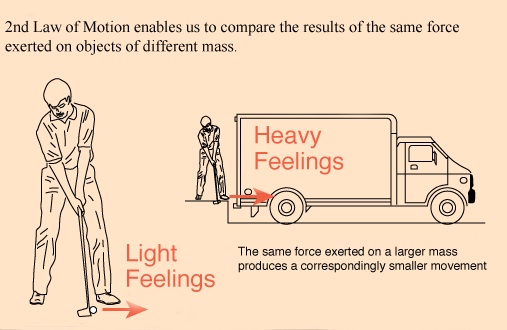
No matter how hard I swing….
You’re going to need a whole lot of energy to move the mass of heavy feelings, more energy than most people have available.
How do you get the energy needed to turn a mountain back into a mole hill?
There is a reason why feelings are described in terms of weight.
Light emotions are feelings with little internal ‘mass’; they exist brightly for a moment in your psyche like a bird resting momentarily on a branch before it lifts its wings and is gone. It’s light, hard to hold, and easily spooked.
Amusement, joy, inspiration, awe, gratitude, and serenity are light emotions with strength, but no mass. Nobody ever reports feeling ‘stuck’ with these feelings, because they’re just passing through, like a bird on a wing, it just flew away, somewhere.
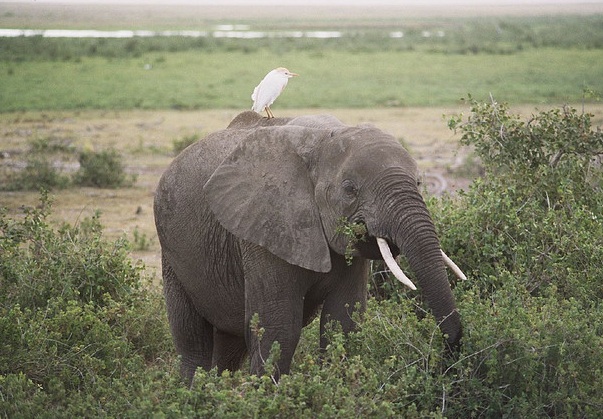
Heavy emotions are, by comparison, like elephants, not going anywhere fast, but still crushing anything underfoot.
Sadness, regret, disappointment, anger, guilt, and loathing are heavy emotions with a great degree of internal mass. They’re no stronger than the light feelings, but they don’t ‘go away’ on their own; they dominate the emotional landscape, and can only be shifted with more energy than is available on an ordinary day.
The increase in psychological mass generated by addictive behavior can be enough to weigh down the best intentions, over and over again, The path you may want to go down could be straight, wide, and well-travelled. It’s clear enough that lots of people go down that road daily. But an addiction can make it look like this:

It was there when I woke up
The changes in your brain (see post Ghost and the Machine) have dropped a boulder bigger than a house in the way, and no one can sense it but you. The increase in internal inertia is often so extreme that battling an addiction takes more energy than is available, thus the often heard instruction “one day at a time”, which sometimes really is too long a period to contemplate.
It is not going to go away. No blame. There have been a whole lot of incredible people throughout history that have played every human role imaginable while ‘pushing the stone’ of addictive behavior.
It is a private battle waged against the inertia of negative feelings that no one wants to hear, or share. ‘Healing’ in this case means being able to move in a positive direction, while tolerating the urges of altered chemistry and weight of extra psychological mass.
http://www.youtube.com/watch?v=1RoyxLF2ccA&ob=av2n
Baby once I thought I knew,
everything I needed to know about you.
Your sweet whisper, your tender touch;
I didn’t really know that much.
Jokes on me, but it’s gonna be OK,
if I can just get through this Lonesome Day.
Hell is brewing, dark sun’s on the rise,
this storm’ll blow through by and by.
House is on fire, vipers in the grass,
a little revenge and this too shall pass.
This too shall pass, darling, I’m gonna pray.
Right now, all I got’s this Lonesome Day.
It’s all right, it’s all right, it’s all right, yeah (3x)
it’s all right, it’s all right…
Better ask questions before you shoot.
Deceit and betrayal’s bitter fruit.
It’s hard to swallow, come time to pay,
that taste on your tongue don’t easily slip away.
Let kingdom come, I’m gonna find my way,
after this Lonesome Day
Music and Lyrics by Bruce Springsteen
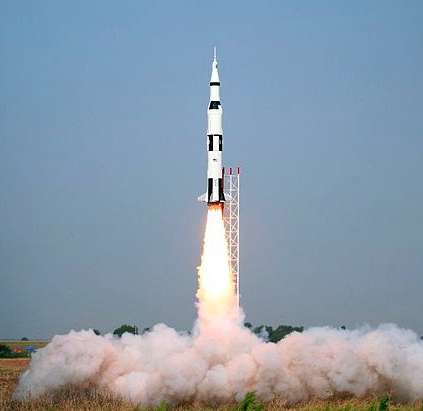
Machine Overcoming Inertia
The first law of motion states that the heavier something is (more mass), the force required to change its direction, or get it to move if it is not moving, increases in proportion to its increase in mass.
In ‘dead things’ like automobiles, planes, trains, and boats, engines that contain chemical reactions produce force to overcome the inertia contained in their static forms. The larger the object, the more powerful the engine, until even giant objects the size of the space shuttle can be motivated to actually leave the earth itself.

Animal Overcoming Inertia
In ‘living things’ the stimulating force required to overcome inertia is often self-generated, arising from somewhere inside, and can be powerful enough to move a huge amount of physical mass. In this way a massive but hungry tiger may be enticed by food across a stream, while a lightweight and satiated housecat wouldn’t move a whisker. The ‘decision’ itself is catalytic, causing the increase in energy needed to overcome the animal’s tendency to stay put.

What Psychological Inertia Feels Like
In most of the animal kingdom it appears decisions are based on instinct and reflex. They are either moving their physical mass, or not. But in humans there is a further, critical process. It involves the addition of psychological mass, an increase in spiritual (non-physical) inertia that accompanies repeated feelings of guilt, embarrassment, shame, disgust, sadness, anxiety, and other heavy feelings that add ‘weight’ to the psyche.
Inertia is the name for the tendency of an object to resist any change in its state of motion or rest, unless acted upon by a great enough force. It is proportional to an object’s mass.
Imagine you are a ball, sitting on top of a Tee. You are in a state of resting inertia, and depending on your mass, you will resist an external force trying to get you to change your resting state.
If you don’t have much mass (like a Ping Pong ball) it won’t take much to move you, possibly just a breeze would do. If you have more mass (like a baseball) it would take a bat, swung with some force. Even more mass (like a cannon ball) will require a cannon, and a charge of dynamite to get you moving.
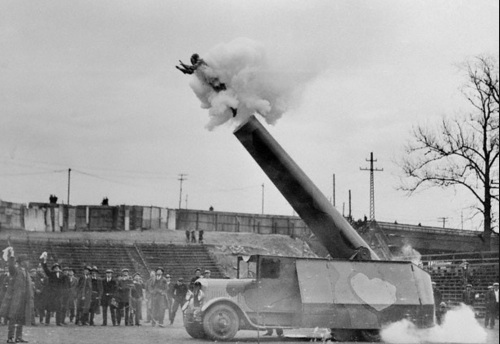
I Finally Found Something To Move Me
Overcoming inertia, correctly applied with the S.A.I.D. principle (see What Nature S.A.I.D part 2) explain almost all the techniques behind strength training. When your body runs up against a weight it can’t move either at all or for enough repetitions, it responds by adding muscular mass in order to generate more force, to overcome the added inertia of the heavier weight.
You wouldn’t question that, right? It’s an obvious enough wisdom for us to accept its application to these ‘dead’ things, objects made of paper, leather, or iron.
Physically we are made from similar stuff, exist in the same environment, and live under the same laws of Nature. Breeze, bat, or dynamite-charged cannon will move you from here to there, and how far that is will be depending on your physical mass and how much external force is applied. You’ll move whether you want to or not.
But what about psychological mass?

How Many Times?
Beneath your personal beliefs, cultural constructs, and things you hold dear, is the human body you were born into, a biologically adaptive organism, hardwired to survive in an unpredictable environment.
This hardwired aspect deals only in real data it gathers from your interaction with your environment, things like body temperature, breathing rate, pulse, metabolic rate, muscular strain, and hormone flow.
Using this data stream your body and brain are always trying to ‘guess’ what may be about to occur, based on the last thing that just did occur. It does this by making adjustments to your physical self in case what had occurred will occur again. It adapts, and over time , evolves.
But it makes the adaptations in a specific manner only, and only in relation to the demand you and the environment placed on it.
Run up one flight of stairs and your body will respond by elevating your heart rate and increasing your respiration rate, anticipating another flight while recovering from the past one.
Run up 25 flights of stairs, daily, and your body will increase your metabolic rate, shuffle nutrients into the muscles involved in the effort, increase the pumping volume of the left ventricle of your heart, and produce more endorphins, a group of hormones that interact with the opiate receptors in your brain to reduce your perception of pain and stress.
Your body will not adapt by increasing the size of your stomach, sharpen your eyesight, strengthen your shoulder muscles, or develop calluses on your hands. It only makes specific adaptations to the specific inputs you cause or allow.
You body is doing this all the time, awake and asleep, at work, and especially at rest. It is one of the fundamental physical processes that is always occurring inside you, without your permission or control.
It is the S.A.I.D. Principle.
Specific Adaptation to Imposed Demand
This picture below represents the way many people experience life, as a set of stairs that begin in childhood and lead on, up, and away from the starting point. How far you may choose to climb will be influenced by genetics, health, and circumstance.

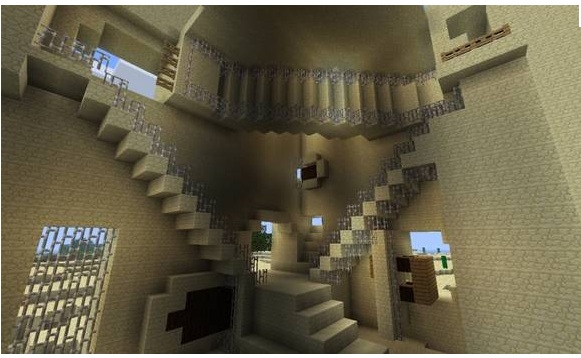
This next represents the way addicts often experience life, as a set of steps that always return to the same point. Climbing these stairs enough can bring feelings of cynicism, resentment, impotency, anxiety, and paralysis.
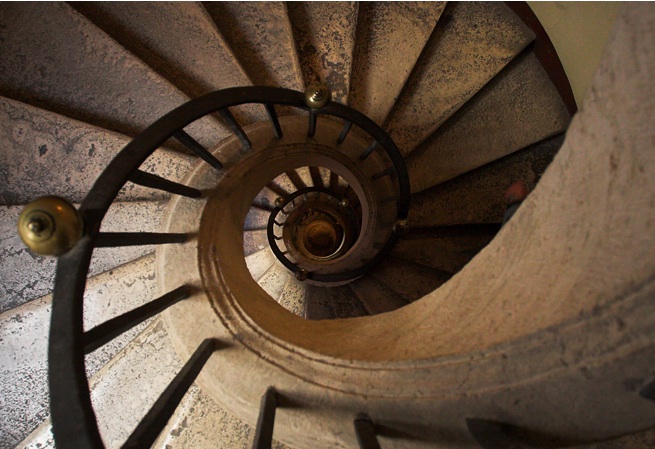
The third is the way people who have had a trauma or addiction to survive may experience life, as a set of stairs that spiral around a central point. The central aspects (trauma or addiction) never recede into the past like the bottom steps on the ‘normal’ stairs, but remain ‘alongside’ you as you climb.
.
Nowadays I keep to myself
Everybody else can look some other way
Things I say seem to get me into trouble
That I’ve been through for too many days
And trouble is a friend of mine
I’d like to leave behind
I like my friends more refined
Things I lose
Weighing on my heart
Every time I start to think
Maybe it’s through
A little lie
Goes a long way when you can’t say
Quite for sure what’s the truth
The truth is something no one really
Wants to hear you say
Just how you doin and have a nice day
Nowadays you go for a walk
Better not stop and wave or say hello
Just this song
People will spit, give you shit
Just for looking at them
And for walking too slow
Slowly and methodically
I’ll lock the world away
Haunted by my better days
Music and Lyrics by the Eels
Anyone who has had any kind of run-in with addiction knows that the idea of personal ‘free will’ is in most cases as substantial as smoke, blown downwind from a fire that has gone out.
Science has put the lie to it, showing us that the ‘you’ that decided to engage in behaviour that stimulated a change in your brain chemistry is literally no longer ‘there’. Your brain has been changed by the action itself (see Ghost and the Machine), and though you may have ‘freely’ chosen the action the initial few times, after that you’re playing follow the leader, and it’s your brain chemistry in front.
We are, belief systems aside, evolutionary individual organisms, being acted on outside of our ‘free will’ by much larger forces than we can control. Nature’s clock keeps time not in hours, or even stages of life, but in adaptations. This process is outside our overall control, but not outside our influence, or we wouldn’t be down here in this stuck place to begin with.
The same process that we engaged to dig this hole can be used to begin to tunnel out, using something called the S.A.I.D. principle.
Get one like this. Simple is better. Stay away from the ones with all the add-ons.
Amazon.com: Polar Heart Rate Monitors – FS3 – Basic Fitness – Model 560139: Health & Personal Care.
This is how to establish your own personal Heart Rate settings:
Top Working (Maximum) Heart Rate: 220 – your age ( example: if your age is 35 yrs old; 220 minus 35 = 185; 185 is your top HR)
Recovery Heart Rate: 60% of Max HR ( example: 60% of 185 = 105; 105 is your Recovery HR)
Using the 12 week jogging program outlined in the Post One Small Step for a Man(found below), you will need the HR monitor beinning in week 7. Jog until you reach your Max HR, then walk until your heart rate falls to your Recovery HR, then jog again till it reaches your Max HR, then walk….like so until you’ve completed the recommended time in the program.
Using the HR monitor allows your body to override your expectations and daily flucuations in fitness. It gives direct feedback on how much you can do on any particular day. As you progress your HR will take a longer time to reach your Max HR, and shorter time to reach the recovery HR, and that basically is all there is to areobic fitness.
The most difficult part by far is just getting yourself to the track.

The Trick Is to Keep Going Back
Eventually you’ll run. Especially if you start by walking. With a small amount of jogging intertwined. The best way is to go to the local High School and use their track. Follow this program:
1. Jog the straights; walk the corners. 6 times maximum. If this is too difficult then walk the straights; jog the corners.
Do this every other day for 3 weeks = 10 times total.
Tip: Don’t do more than this, the classic mistake is to think you can get to health quickly by going quicker, actually that way basically guarantees failure, as your body and will break down under the sudden demand.
2. Jog two straights plus one corner; walk the other corner 6 times maximum
Do this every other day for 3 weeks = 10 times total
Tip: All training is interrupted by weather, sickness, transportation problems; is doesn’t matter if you miss a session, just keep plugging…nobody cares, so there is nothing to prove, this is a completely private war you’re waging….
3. Put on your Heart Rate monitor and jog the whole track till you reach your target Working Heart Rate (see Heart Rate Monitor blog entry); Then walk till your HR goes back down to your target Resting Heart Rate
Do this every other day for 20 minutes for 3 weeks
Tip: Use the HR monitor as your guide, as soon as you hit the target, on either end of the scale, change activities. Your heart rate gives you a direct feedback on your daily condition, some days you’ll be able to do more, others less.
4. Same as the previous period; using the HR method
Do this every other day for 30 minutes for 3 weeks = 10 times
A few rules for using exercise to rebuild your health;
Simple is best
Slow beats quick
Some is better than none
A hundred beginnings still adds up to one hundred repetitions
This is a 12 week program.
It is most effective if completed in 12 weeks, but most people won’t get it done in 16.
It is not better to get it done in 8 weeks, it is actually less effective.
Follow the program as if you are walking up a flight of stairs, don’t skip any steps, and if you stop for any reason go back to exactly where you stopped before continuing.
When lifting weights remember to start light and perform fewer repetitions. As your strength builds add more repetitions before adding more weight.
When jogging/running always use a heart rate monitor and stick to the heart rate values suggested. The HR monitor allows your body to give you direct accurate feedback on your fitness outside of your conscious thought or preconceptions of how fit you think you are.
Want to do more? Add the abdominal breathing practice found here: ( see the Breath Restoration link on the Home Page Menu)
for·give v.
1. To excuse for a fault or an offense; pardon. 2. To renounce anger or resentment against.
for·get v.
1. To treat with thoughtless inattention; 2. To banish from one’s thoughts 3. To disregard on purpose.

Addictive urges come like waves on the ocean, pushed by the deeper hidden currents of Nature working through the chemistry of your brain and body, and to a person trying to stop the repetition it can be like building sand castles on the beach at the high water line.
Eventually all the work you’ve done building walls and digging moats is compromised by a sudden wave that is just a little stronger than the rest, and within minutes, it’s all been swept away.
Ashamed of nature? Disappointed by wind and tide?
Forgive it. No blame, no shame, just another day at the ocean’s edge.
But don’t forget it.
Some waves are naturally bigger than the rest.
To build a lasting castle stay away from the ocean’s edge.

Circular Nature of Behavior Change
You can quit ‘Cold Turkey’, any time, you just have to want it enough. People quit smoking, drinking, binge eating, masturbating to pornography, you name it, they’ve quit doing it, ’Cold Turkey’, no help, just the decision to stop backed with willpower and a strong constitution.
Don’t believe it. It’s not true. Literally, one person in ten thousand, maybe. The rest are forgetting the little slip ups, the couple of puffs, a few sips, the bags of chips, releasing the stress…
The reality of addiction is that the person who is trying to quit is not who they used to be, so how is ‘Cold Turkey’ possible? There is no ‘old you’ to come back to, instead a different you, through a filter of the effects of your changed body chemistry. The changed chemistry calls out for the stimulus that caused the change, a cellular compulsion that feels like an urge, getting stronger the longer you go ‘without’, it’s a war every addicted person fights when they try to quit, whether you want to or not.
Win some, lose some, hope you develop a winning streak…
“Opportunity may knock only once, but temptation leans on the doorbell.” Author Unknown
“The chains of habit are generally too small to be felt until they are too strong to be broken.” Samual Johnson
“Just cause you got the monkey off your back doesn’t mean the circus has left town.” George Carlin
“When you can stop you don’t want to, and when you want to stop, you can’t…” Luke Davies
 stormcrossing