
You are currently browsing the category archive for the ‘If Only You Could Turn back Time’ category.
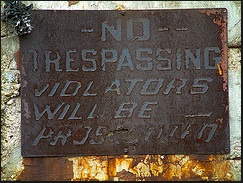
I Can’t Remember Putting That Up
It’s completely private, this thing you do. Whether it happens in public or not doesn’t matter, because it belongs to you. The accepted wisdom is that addiction “harms those you love”, but it is in what it does to your self where the effects cut most deeply.
If you wake up next to a loser, you could always choose to leave, but if you wake up as a loser, you’re not going anywhere, really, fast.
The biggest mistake too many make is thinking they can return to a time before they were changed by whatever it is; Alcohol, marijuana, cocaine, cigarettes, pornography, eating, staring at a screen.
Trying to get back to the earlier, non-addicted you is actually impossible. You’ve changed. It’s over. You can not go back. Your brain and body are different and all you can do is be a different, post-addicted version of you.
Once you accept the basic fact that you are changed, you’re ready to go somewhere positive.

Thinking that you are still the same you, and you can go back to the old you if you just want to enough is like thinking you can recreate the wonderful weather from last summer. That is the trap of optimism, assuming that just because you can imagine it going well, it actually will. In reality it is just as likely to rain all summer.
Often people try to prove that they haven’t been changed by their addiction by approaching their new health and fitness program with an overly optimistic mindset. They think that getting back to fitness ‘fast’ shows that they weren’t really as stuck as it had appeared.
They begin their health and fitness program with a burst of optimistic commitment, thinking that more sessions per week will be better than fewer, more weight lifted will be better than less, more laps jogging around the track will be better than just taking a walk. What inevitably happens is a breakdown, an injury, a ‘pushback’ from their subconscious, or some external life crisis that causes a pause in the program, which soon lengthens to a full stop. Once again, stuck again.
You just can’t jump from ‘in it’ to ‘out of it’, and no leap can be made from wanting to recover, to ‘recovered’.
Plan with pessimism; approach with optimism.
Plan that you’ll need more time than you expect. Then do your best.
It really is that simple, though no way, easy.
Addiction is, at its most basic level, being stuck.
Not stuck as if in glue, but stuck in place like this guy:

Or maybe here is a more fitting representation:
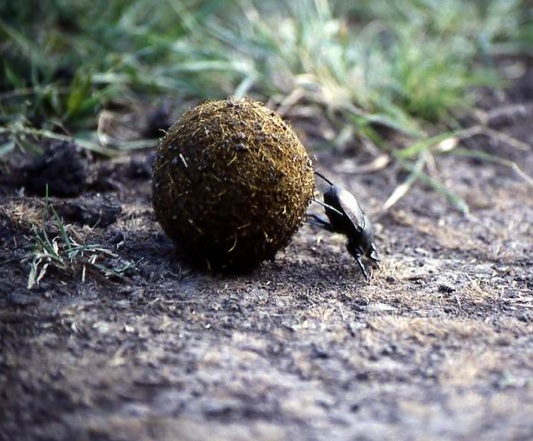
The addiction has changed you chemically, physically, and psychologically, while simultaneously adding to your spiritual (unseen) mass.
This build up of self-generated psychological mass has created an internal inertial property beyond your psyche’s ability to create movement, more ‘weight’ than you can handle.
So you’re going to need more energy, way more energy, to get things moving within you.
There are three sets of circumstance that cause the sudden release of psychic energy. Unfortunately these circumstances cannot be made to happen, they just happen ‘by themselves’, and they are the type of circumstance that one wishes wouldn’t happen at all.
They are:
A life threatening illness
A near death experience
The unexpected death of someone dear to you
Any of these three can temporarily ‘blow up’ the stone-like mass of internal heavy emotions, and for a while your psyche feels lighter, less stuck, and you’ll feel more free and able to move. You will find it easier to make changes, your intention and willpower more direct in its ability to shift your life’s direction.
Since this is an energy releasing effect, not energy generating, the sudden change in circumstance acts like an explosion, and so after a time things come back down to earth.
The mass returns, in pieces for a while, until it slowly re-forms back into solidity.
There must be somewhere else to find the energy to move the mass inside you.
The increase in psychological mass generated by addictive behavior can be enough to weigh down the best intentions, over and over again, The path you may want to go down could be straight, wide, and well-travelled. It’s clear enough that lots of people go down that road daily. But an addiction can make it look like this:
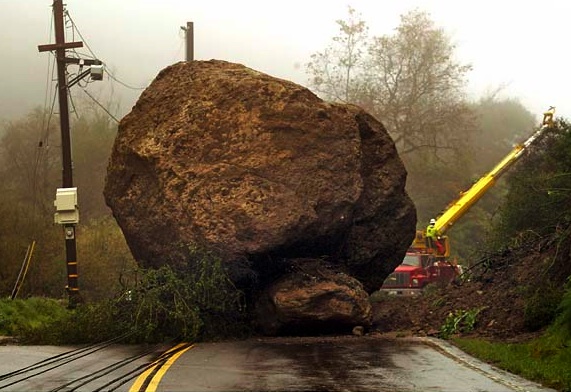
It was there when I woke up
The changes in your brain (see post Ghost and the Machine) have dropped a boulder bigger than a house in the way, and no one can sense it but you. The increase in internal inertia is often so extreme that battling an addiction takes more energy than is available, thus the often heard instruction “one day at a time”, which sometimes really is too long a period to contemplate.
It is not going to go away. No blame. There have been a whole lot of incredible people throughout history that have played every human role imaginable while ‘pushing the stone’ of addictive behavior.
It is a private battle waged against the inertia of negative feelings that no one wants to hear, or share. ‘Healing’ in this case means being able to move in a positive direction, while tolerating the urges of altered chemistry and weight of extra psychological mass.
for·give v.
1. To excuse for a fault or an offense; pardon. 2. To renounce anger or resentment against.
for·get v.
1. To treat with thoughtless inattention; 2. To banish from one’s thoughts 3. To disregard on purpose.

Addictive urges come like waves on the ocean, pushed by the deeper hidden currents of Nature working through the chemistry of your brain and body, and to a person trying to stop the repetition it can be like building sand castles on the beach at the high water line.
Eventually all the work you’ve done building walls and digging moats is compromised by a sudden wave that is just a little stronger than the rest, and within minutes, it’s all been swept away.
Ashamed of nature? Disappointed by wind and tide?
Forgive it. No blame, no shame, just another day at the ocean’s edge.
But don’t forget it.
Some waves are naturally bigger than the rest.
To build a lasting castle stay away from the ocean’s edge.
You can quit ‘Cold Turkey’, any time, you just have to want it enough. People quit smoking, drinking, binge eating, masturbating to pornography, you name it, they’ve quit doing it, ’Cold Turkey’, no help, just the decision to stop backed with willpower and a strong constitution.
Don’t believe it. It’s not true. Literally, one person in ten thousand, maybe. The rest are forgetting the little slip ups, the couple of puffs, a few sips, the bags of chips, releasing the stress…
The reality of addiction is that the person who is trying to quit is not who they used to be, so how is ‘Cold Turkey’ possible? There is no ‘old you’ to come back to, instead a different you, through a filter of the effects of your changed body chemistry. The changed chemistry calls out for the stimulus that caused the change, a cellular compulsion that feels like an urge, getting stronger the longer you go ‘without’, it’s a war every addicted person fights when they try to quit, whether you want to or not.
Win some, lose some, hope you develop a winning streak…
 stormcrossing