
You are currently browsing the category archive for the ‘Rules of the Game’ category.
I Can’t Remember Putting That Up
It’s completely private, this thing you do. Whether it happens in public or not doesn’t matter, because it belongs to you. The accepted wisdom is that addiction “harms those you love”, but it is in what it does to your self where the effects cut most deeply.
If you wake up next to a loser, you could always choose to leave, but if you wake up as a loser, you’re not going anywhere, really, fast.
The biggest mistake too many make is thinking they can return to a time before they were changed by whatever it is; Alcohol, marijuana, cocaine, cigarettes, pornography, eating, staring at a screen.
Trying to get back to the earlier, non-addicted you is actually impossible. You’ve changed. It’s over. You can not go back. Your brain and body are different and all you can do is be a different, post-addicted version of you.
Once you accept the basic fact that you are changed, you’re ready to go somewhere positive.
This tendency of objects in nature to want to remain in the same state and to resist any changes unless the object is forced to do so is called the inertial property. The inertial property then is the resistance to change; the object will not change unless enough force is applied to overcome its resistance. An increase in mass directly increases the inertial property and will require more force to create movement. That is the 1st Law of Motion.
The 2nd Law of Motion states that movement is produced when a force acts on a mass. The greater the mass (of the object being moved) the greater the amount of force needed (to move the object).
Addiction increases this natural tendency to resist change as your generation of dense emotions increases your personal inertial property. You may look the same to the outside world, but you feel ‘heavier’ to your own will. The amount of internal force it takes to move light feelings is significantly less than that needed to get dense feelings moving: (see illustration below)
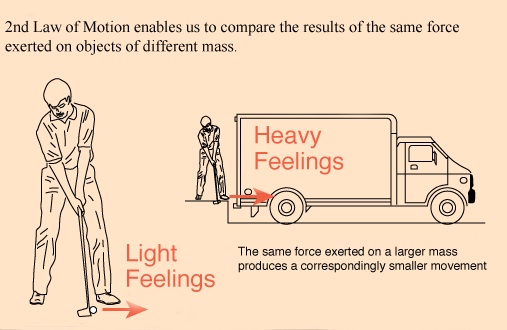
No matter how hard I swing….
You’re going to need a whole lot of energy to move the mass of heavy feelings, more energy than most people have available.
How do you get the energy needed to turn a mountain back into a mole hill?
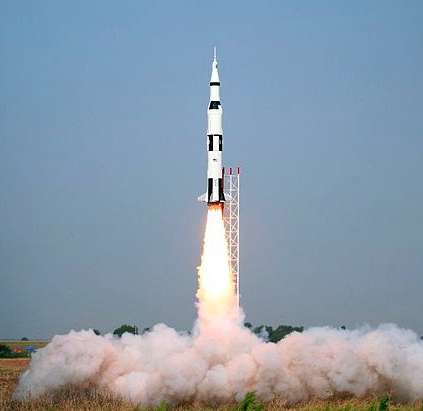
Machine Overcoming Inertia
The first law of motion states that the heavier something is (more mass), the force required to change its direction, or get it to move if it is not moving, increases in proportion to its increase in mass.
In ‘dead things’ like automobiles, planes, trains, and boats, engines that contain chemical reactions produce force to overcome the inertia contained in their static forms. The larger the object, the more powerful the engine, until even giant objects the size of the space shuttle can be motivated to actually leave the earth itself.

Animal Overcoming Inertia
In ‘living things’ the stimulating force required to overcome inertia is often self-generated, arising from somewhere inside, and can be powerful enough to move a huge amount of physical mass. In this way a massive but hungry tiger may be enticed by food across a stream, while a lightweight and satiated housecat wouldn’t move a whisker. The ‘decision’ itself is catalytic, causing the increase in energy needed to overcome the animal’s tendency to stay put.

What Psychological Inertia Feels Like
In most of the animal kingdom it appears decisions are based on instinct and reflex. They are either moving their physical mass, or not. But in humans there is a further, critical process. It involves the addition of psychological mass, an increase in spiritual (non-physical) inertia that accompanies repeated feelings of guilt, embarrassment, shame, disgust, sadness, anxiety, and other heavy feelings that add ‘weight’ to the psyche.
Inertia is the name for the tendency of an object to resist any change in its state of motion or rest, unless acted upon by a great enough force. It is proportional to an object’s mass.
Imagine you are a ball, sitting on top of a Tee. You are in a state of resting inertia, and depending on your mass, you will resist an external force trying to get you to change your resting state.
If you don’t have much mass (like a Ping Pong ball) it won’t take much to move you, possibly just a breeze would do. If you have more mass (like a baseball) it would take a bat, swung with some force. Even more mass (like a cannon ball) will require a cannon, and a charge of dynamite to get you moving.
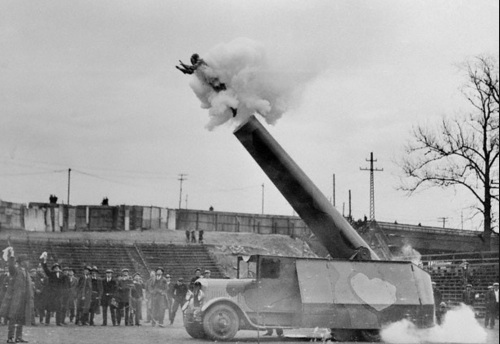
I Finally Found Something To Move Me
Overcoming inertia, correctly applied with the S.A.I.D. principle (see What Nature S.A.I.D part 2) explain almost all the techniques behind strength training. When your body runs up against a weight it can’t move either at all or for enough repetitions, it responds by adding muscular mass in order to generate more force, to overcome the added inertia of the heavier weight.
You wouldn’t question that, right? It’s an obvious enough wisdom for us to accept its application to these ‘dead’ things, objects made of paper, leather, or iron.
Physically we are made from similar stuff, exist in the same environment, and live under the same laws of Nature. Breeze, bat, or dynamite-charged cannon will move you from here to there, and how far that is will be depending on your physical mass and how much external force is applied. You’ll move whether you want to or not.
But what about psychological mass?

How Many Times?
Beneath your personal beliefs, cultural constructs, and things you hold dear, is the human body you were born into, a biologically adaptive organism, hardwired to survive in an unpredictable environment.
This hardwired aspect deals only in real data it gathers from your interaction with your environment, things like body temperature, breathing rate, pulse, metabolic rate, muscular strain, and hormone flow.
Using this data stream your body and brain are always trying to ‘guess’ what may be about to occur, based on the last thing that just did occur. It does this by making adjustments to your physical self in case what had occurred will occur again. It adapts, and over time , evolves.
But it makes the adaptations in a specific manner only, and only in relation to the demand you and the environment placed on it.
Run up one flight of stairs and your body will respond by elevating your heart rate and increasing your respiration rate, anticipating another flight while recovering from the past one.
Run up 25 flights of stairs, daily, and your body will increase your metabolic rate, shuffle nutrients into the muscles involved in the effort, increase the pumping volume of the left ventricle of your heart, and produce more endorphins, a group of hormones that interact with the opiate receptors in your brain to reduce your perception of pain and stress.
Your body will not adapt by increasing the size of your stomach, sharpen your eyesight, strengthen your shoulder muscles, or develop calluses on your hands. It only makes specific adaptations to the specific inputs you cause or allow.
You body is doing this all the time, awake and asleep, at work, and especially at rest. It is one of the fundamental physical processes that is always occurring inside you, without your permission or control.
It is the S.A.I.D. Principle.
Specific Adaptation to Imposed Demand
Anyone who has had any kind of run-in with addiction knows that the idea of personal ‘free will’ is in most cases as substantial as smoke, blown downwind from a fire that has gone out.
Science has put the lie to it, showing us that the ‘you’ that decided to engage in behaviour that stimulated a change in your brain chemistry is literally no longer ‘there’. Your brain has been changed by the action itself (see Ghost and the Machine), and though you may have ‘freely’ chosen the action the initial few times, after that you’re playing follow the leader, and it’s your brain chemistry in front.
We are, belief systems aside, evolutionary individual organisms, being acted on outside of our ‘free will’ by much larger forces than we can control. Nature’s clock keeps time not in hours, or even stages of life, but in adaptations. This process is outside our overall control, but not outside our influence, or we wouldn’t be down here in this stuck place to begin with.
The same process that we engaged to dig this hole can be used to begin to tunnel out, using something called the S.A.I.D. principle.
rem·e·dy n. 1. Something, such as medicine or therapy, that relieves pain, cures disease, or corrects a disorder. 2. Something that corrects an evil, fault, or error.
res·cue 1. To set free, as from danger or imprisonment; save.
You have to do it yourself. If there were a pill you could take to stop addiction, they’d be selling billions. If there were a number you could call, a person you could see, a service you could use, there would be lines out the door, around the block, over the horizon. But there is not. There is no remedy, no rescue. There is no stage to grow out of, no light to step into, no special way, or lucky day. No diet, no quiet space, no ancient practice, no healing place. No transformation, no shoulder patch, no realization, no escape hatch.
There is basically nothing you can do to quickly effect or change the fact that you’re addicted. If you are waiting for a quick solution you won’t find it here, and by here I mean not only this site, but on the planet Earth.
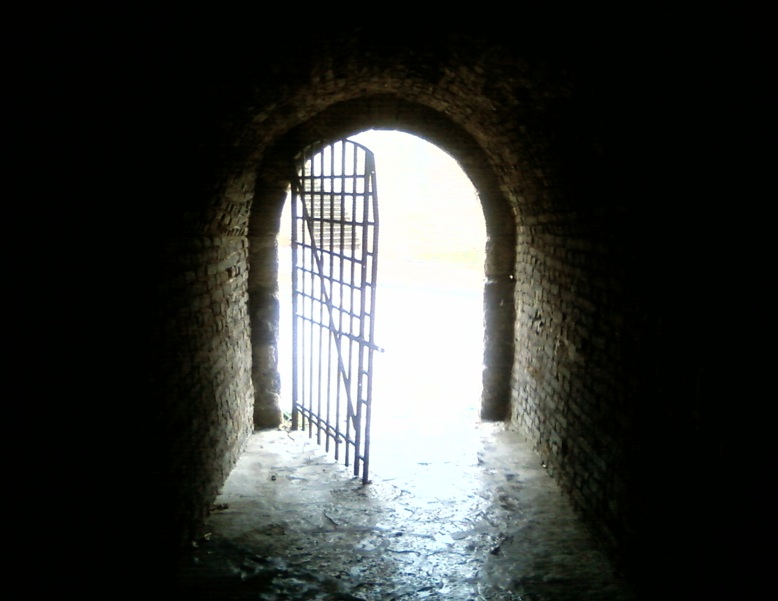
Are you searching for a solution, any solution?
There are some ways to go, paths that others have gone down before that seem to have some probability of success in the long run. But it’s a long run. If you are ready to make another attempt at kicking it, this site will help.
Please use the Categories menu to the left for ease of navigation.
 stormcrossing