
You are currently browsing the tag archive for the ‘spirituality’ tag.
“Boogie Street”
Words and Music by Leonard Cohen
O Crown of Light, O Darkened One,
I never thought we’d meet.
You kiss my lips, and then it’s done:
I’m back on Boogie Street.
A sip of wine, a cigarette,
And then it’s time to go.
I tidied up the kitchenette;
I tuned the old banjo.
I’m wanted at the traffic-jam.
They’re saving me a seat.
I’m what I am, and what I am,
Is back on Boogie Street.
And O my love, I still recall
The pleasures that we knew;
The rivers and the waterfall,
Wherein I bathed with you.
Bewildered by your beauty there,
I’d kneel to dry your feet.
By such instructions you prepare
A man for Boogie Street.
O Crown of Light, O Darkened One…
So come, my friends, be not afraid.
We are so lightly here.
It is in love that we are made;
In love we disappear.
Tho’ all the maps of blood and flesh
Are posted on the door,
There’s no one who has told us yet
What Boogie Street is for.
O Crown of Light, O Darkened One,
I never thought we’d meet.
You kiss my lips, and then it’s done:
I’m back on Boogie Street.
A sip of wine, a cigarette,
And then it’s time to go . . .
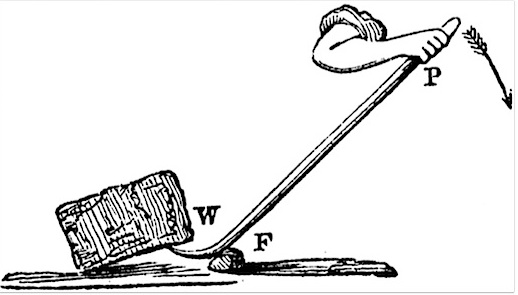
A lever won’t work without a fulcrum.
The best fulcrum is composed of something solid, holds up well under pressure, has a non-slippery surface, and broad base that resists sinking into the surface it is placed upon.
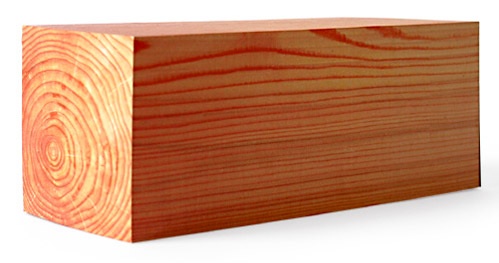
Everyone Should Have One
In the physical world a large block of hardwood is the fulcrum of choice.
These same characteristics are required to create a fulcrum of Purpose when one is confronted with a debilitating psychological mass that needs moving. The extreme density of the negative emotions created by addictive behavior is such a mass, and its resistance to change is most often too large a load for the average psyche.
This Purpose you create must be deep, broad, non-slippery, and hold up under the pressure that will be applied to it by people and circumstance.
Addictive behavior is slippery, it sinks into your psyche, and it reacts negatively to pressure. Because of those characteristics, it is essential that the intention of being free from your addiction is only a byproduct of your purpose, not the purpose itself.
Your Purpose should be bigger than just wanting to be free from addiction, but a purpose that is as large as the rest of your life. The kind of Purpose that requires a full stop in the addiction cycle in order for it to be fulfilled, for that is the only kind that will work as a fulcrum on which you can place a lever strong enough to move the internal mass that throws a shadow across your world.

For some thoughts on Purpose, see the Purpose page: bottom link on the left
The third element needed for the functioning of the internal lever is force, or energy. Your normal sources of energy have been depleted by the
on-off nature of the addictive process, and you’ll need to find an ‘outside’ source of added energy if you seek success at moving the stone.

I’ll Need Help with This
This energy you’ll need; you won’t be able to buy it, or borrow it, steal it, or even rent it.
You can however, using the process of the Projected Word, locate, concentrate, and direct energy towards getting out from under the heavy shadow of the psychological mass of negativity.
The start of the Projected Word process involves establishing a location for the reception of psychic energy.
For a 5-minute period a day sit completely alone, without obvious distractions like, music, video, and telephone.
Speak quietly to yourself the word, “I”. Pause for approximately 10-secounds, (approx. 3 breaths), and then repeat the word, again quietly out loud, “I”.
Repeat this step for 5-minutes, daily for 5 days.
The word must be said out loud, not rushed, as if you are a homing beacon broadcasting a location from a boat lost out on the ocean.
(This statement establishes location in space)
On day 6 add the word “am”, so that you are saying, quietly out loud, “I am”. Pause for approximately 10-secounds, (approx. 3 breaths), and then repeat the words again, “I am”.
Repeat this step for 5-minutes, daily for 5 days.
The words are said in a matter of fact manner, and as a complete sentence. Resist the temptation to add any descriptive words in your thoughts after the statement “I am”. (I am tired, I am fat, I am stupid, I am…anything)
(This statement establishes location in time)
On day 11 add the word “ energetic”, so that you are saying, quietly out loud, “I am energetic”. Pause for approximately 10-secounds, (approx 3 breaths), and then repeat the words again, “I am energetic”.
Repeat this step for 5-minutes, daily for 5 days.
(This statement concentrates energy)
On day 16 add a second sentence after the first, speaking the words, “ I am forgiving, resilient, and free from negativity.” Pause for approximately 10-secounds, (approx. 3 breaths), and then repeat the two short sentences again, “I am energetic. I am forgiving, resilient, and free from negativity.”
Repeat this step for 5-minutes, daily for 5 days.
(This second statement directs energy)

Not the Right Kind of Lever
It will take energy to shift the psychological mass created by your addiction, and the energy will have to come from some unfamiliar direction, because the ‘you’ that started out is not you that exists now.
‘You’ have been changed, your brain chemistry altered by the same addictive behavior cycle that has produced the mass of negativity that exists, unseen by the outside world, within your character.
You now will have to find a new way to get the energy needed to lever away the stone.
In the ‘seen’ world of physical reality, the simple tool that has been used through history to great effect is called the class 1 lever. Monuments from Stonehenge, Easter Island, and Egypt testify to its ability to move huge amounts of mass with only human energy as the motivator.
But since the internal mass exists ‘under’ the surface of physical reality, amidst the neurons and hormones that turn your thoughts, impulses, and drives into feelings and action, the tools and energy required to move it must be able to function there, in the ‘insubstantial’ world of your inner self.
In the substantial ‘outer’ world, the parts of the Class 1 lever must also have substance, like real-to-the-touch wood, metal, and stone. Try moving a boulder, or even a pebble, just by thinking about it…nothing doing.

The Kid has it Correct
But jam one end of the arm of the lever under its edge, lay the lever across the top of the fulcrum, use some force and…movement.
In the insubstantial ‘inner’ world, the parts of the lever must, accordingly, be without physical form themselves, but the basic principle of using a lever to move mass remains the same.

It will be the interplay between of your intention to improve in your Practice with the psychological mass of your addiction that will allow your Practice to work as a lever.
Because a Practice includes regular work, it mirrors the addictive process by constantly appearing in your day-to-day life, where it must interact and compete with the addictive process for your time and energy.
At first the new practice has no depth, it just rides on the surface tension of your psyche, like a water bug in the currents of a stream.
But in time, and with many repetitions, it develops width and depth, and you can use it to go ‘under’ your familiar surface reactions and behaviors. It is then that it brings back information about the depths of your internal world, not only about the psychological mass of negativity that you’ve developed through addiction, but also about other, deeper aspects of yourself, strengths and skills that have been obscured from your view.
It can ride above, but go below:
It is during this process that your Practice begins to function as a lever, and you can start to move the mass that sits there, if you have enough energy to bring to the task.
The shortest way through to a source of energy that doesn’t have to be bought, developed, taken out on loan, or talked into helping you, is to use the tried and proven method called Projected Word.

If you have created a solid Purpose with a broad enough base, you can then use it to brace your lever. One end of the lever must be jammed under/into the mass that you are trying to move. The lever then lies across the fulcrum; its upper end will be where force is applied to shift the mass.
Remember, the mass you are trying to move out of your way is basically invisible, only existing inside you alone, as a psychological barrier composed of intertwined thoughts, feelings, impulses, and habits relating to your addiction.
The lever you use to move it will be made also of invisible ‘stuff’, and perfect for the task for that reason. This lever is formed from Practice.
What is a Practice?
Anything that will take time to master, an activity or skill that one must work at regularly, with focus, in order to improve or maintain proficiency. It could come from one of these:
Musical instrument
Writing
Gardening
Dance
Cooking
Drawing and Painting
Photography
Martial Arts
A Field of Study
The best idea would be to pick something that has always interested you in some sense, find a teacher, and begin. The teacher can be a book, online, at a school or university, or a club. It does not matter, how you are taught, or where. What matters is why.
The Practice must include the intention to improve, to get better at your chosen activity.
It will be the interplay between of your intention to improve in your Practice with the psychological mass of your addiction that will allow your Practice to work as a lever.
See the common stages of Practice here:
 The psychological mass of addictive behavior, brought about by the heaviness of the emotions involved in the cycle of quit/restart/quit/restart… is more of a load than most people can move on their own.
It takes too much energy, expressed continually for too long a time, and often one just ends up wrestling with this giant thing, like a dung beetle doing everything it can to move its huge ball of crap…just a little.
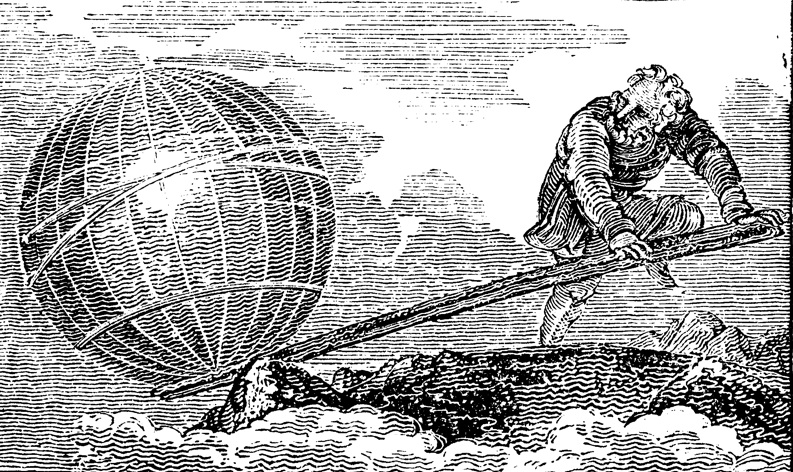
Archimedes suggested that there is another way to move mass, using a lever, as seen here:
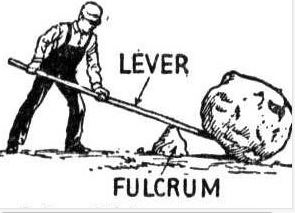
Since we are talking about a psychological load, we are not going to use a physical lever, but we will use the same principles used in the physical world.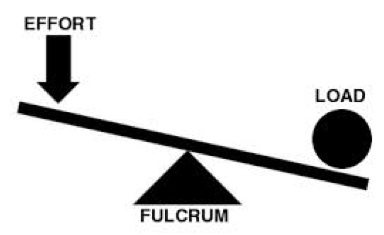
As can be seen from the diagram, there are three parts to a lever that are all essential if one is to move a load; the lever, the fulcrum, and a force.
The lever must be made of something continuous and strong, in order to transfer the force into the load. The psychological process that will stand for the lever will be a Practice.
The fulcrum must be something solid and unmoving, in order to best support the lever and transfer all the force into the load. The psychological process for the fulcrum will be a Purpose.
The force applied must be focused into the lever alone; otherwise chances are it won’t be enough force to shift the load. The psychological process for focusing the force will be through the Projected Word.
Something you did you felt good. It was a bet, a hit, a sip, a jerk, a puff, a jog, a click. You did it, and the reward came like a ghost that only you could sense, a feeling that you could talk about if you wanted to, but not one that could actually be seen.
Yet that good feeling was in a major sense solid and mechanical, like an automobile, or a train, a mechanism that moves because of a series of real, chemical events cause it to.
There was an actual mechanism at work in your brain that was at the root of your feeling, the release of the hormones Serotonin, Epinephrine, and Dopamine. It was the elevated levels of one or more of these hormones that was the hidden ghostly projector, the cause of the feeling you experienced.
The fundamental evolutionary mechanism of life is adaptation, and your brain does this mechanically, outside of your approval, like breathing or maintaining your body temperature. It always adapts to the last stimulus. If you climb the stairs rapidly, your breathing rate increases and your temperature rises all by itself, it happens without your conscious volition. The train just heads off down the track.
So once a certain amount of these stimulating hormones are released while engaging in an activity that triggers the release, your brain cells adapt to having the elevated levels present.
The hormones stimulate your brain, and your brain responds by resetting itself to the new level of stimulation as its new baseline for ‘normal’. But the new ‘normal’ is actually elevated above what used to be your experience of you, and the place where the old ‘normal you’ existed seems lowered in comparison.
But if it’s the high that you crave, that rise above the ‘normal’ position, it will now take a bit more of whatever you originally did to get the same effect, since as your brain gets accustomed to the stimulation, it requires more and more hormones to achieve the same effect, the same rise.
If you decide to stop, your brain isn’t used to the lowered hormone levels, and your new ‘lowered normal’ sucks, big time.

Thinking that you are still the same you, and you can go back to the old you if you just want to enough is like thinking you can recreate the wonderful weather from last summer. That is the trap of optimism, assuming that just because you can imagine it going well, it actually will. In reality it is just as likely to rain all summer.
Often people try to prove that they haven’t been changed by their addiction by approaching their new health and fitness program with an overly optimistic mindset. They think that getting back to fitness ‘fast’ shows that they weren’t really as stuck as it had appeared.
They begin their health and fitness program with a burst of optimistic commitment, thinking that more sessions per week will be better than fewer, more weight lifted will be better than less, more laps jogging around the track will be better than just taking a walk. What inevitably happens is a breakdown, an injury, a ‘pushback’ from their subconscious, or some external life crisis that causes a pause in the program, which soon lengthens to a full stop. Once again, stuck again.
You just can’t jump from ‘in it’ to ‘out of it’, and no leap can be made from wanting to recover, to ‘recovered’.
Plan with pessimism; approach with optimism.
Plan that you’ll need more time than you expect. Then do your best.
It really is that simple, though no way, easy.
This my excavation and today is kumran
Everything that happens from now on
This is pouring rain
This is paralyzed
I keep throwing it down two-hunded at a time
It’s hard to find it when you knew it
When your money’s gone
And you’re drunk as hell
On your back with your racks as the stacks are your load
In the back and the racks and the stacks of your load
In the back with your racks and you’re un-stacking your load
Well I’ve been twisting to the sun and the moon
I needed to replace
The fountain in the front yard is rusted out
All my love was down
In a frozen ground
There’s a black crow sitting across from me
His wiry legs are crossed
He is dangling my keys, he even fakes a toss
Whatever could it be
That has brought me to this loss?
On your back with your racks as the stacks are your load
In the back and the racks and the stacks of your load
In the back with your racks and you’re un-stacking your load
This is not the sound of a new man or crispy realization
It’s the sound of the unlocking and the lift away
Your love will be
Safe with me
Words and Music by Bon Iver
Addiction is, at its most basic level, being stuck.
Not stuck as if in glue, but stuck in place like this guy:

Or maybe here is a more fitting representation:

The addiction has changed you chemically, physically, and psychologically, while simultaneously adding to your spiritual (unseen) mass.
This build up of self-generated psychological mass has created an internal inertial property beyond your psyche’s ability to create movement, more ‘weight’ than you can handle.
So you’re going to need more energy, way more energy, to get things moving within you.
There are three sets of circumstance that cause the sudden release of psychic energy. Unfortunately these circumstances cannot be made to happen, they just happen ‘by themselves’, and they are the type of circumstance that one wishes wouldn’t happen at all.
They are:
A life threatening illness
A near death experience
The unexpected death of someone dear to you
Any of these three can temporarily ‘blow up’ the stone-like mass of internal heavy emotions, and for a while your psyche feels lighter, less stuck, and you’ll feel more free and able to move. You will find it easier to make changes, your intention and willpower more direct in its ability to shift your life’s direction.
Since this is an energy releasing effect, not energy generating, the sudden change in circumstance acts like an explosion, and so after a time things come back down to earth.
The mass returns, in pieces for a while, until it slowly re-forms back into solidity.
There must be somewhere else to find the energy to move the mass inside you.
This tendency of objects in nature to want to remain in the same state and to resist any changes unless the object is forced to do so is called the inertial property. The inertial property then is the resistance to change; the object will not change unless enough force is applied to overcome its resistance. An increase in mass directly increases the inertial property and will require more force to create movement. That is the 1st Law of Motion.
The 2nd Law of Motion states that movement is produced when a force acts on a mass. The greater the mass (of the object being moved) the greater the amount of force needed (to move the object).
Addiction increases this natural tendency to resist change as your generation of dense emotions increases your personal inertial property. You may look the same to the outside world, but you feel ‘heavier’ to your own will. The amount of internal force it takes to move light feelings is significantly less than that needed to get dense feelings moving: (see illustration below)
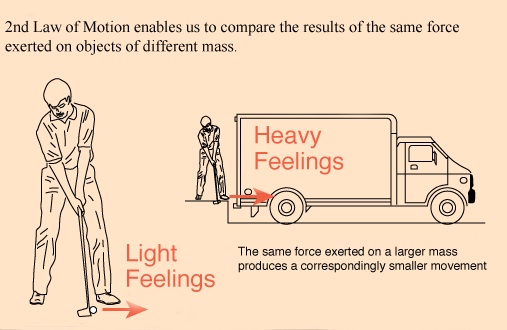
No matter how hard I swing….
You’re going to need a whole lot of energy to move the mass of heavy feelings, more energy than most people have available.
How do you get the energy needed to turn a mountain back into a mole hill?
There is a reason why feelings are described in terms of weight.
Light emotions are feelings with little internal ‘mass’; they exist brightly for a moment in your psyche like a bird resting momentarily on a branch before it lifts its wings and is gone. It’s light, hard to hold, and easily spooked.
Amusement, joy, inspiration, awe, gratitude, and serenity are light emotions with strength, but no mass. Nobody ever reports feeling ‘stuck’ with these feelings, because they’re just passing through, like a bird on a wing, it just flew away, somewhere.

Heavy emotions are, by comparison, like elephants, not going anywhere fast, but still crushing anything underfoot.
Sadness, regret, disappointment, anger, guilt, and loathing are heavy emotions with a great degree of internal mass. They’re no stronger than the light feelings, but they don’t ‘go away’ on their own; they dominate the emotional landscape, and can only be shifted with more energy than is available on an ordinary day.
The increase in psychological mass generated by addictive behavior can be enough to weigh down the best intentions, over and over again, The path you may want to go down could be straight, wide, and well-travelled. It’s clear enough that lots of people go down that road daily. But an addiction can make it look like this:

It was there when I woke up
The changes in your brain (see post Ghost and the Machine) have dropped a boulder bigger than a house in the way, and no one can sense it but you. The increase in internal inertia is often so extreme that battling an addiction takes more energy than is available, thus the often heard instruction “one day at a time”, which sometimes really is too long a period to contemplate.
It is not going to go away. No blame. There have been a whole lot of incredible people throughout history that have played every human role imaginable while ‘pushing the stone’ of addictive behavior.
It is a private battle waged against the inertia of negative feelings that no one wants to hear, or share. ‘Healing’ in this case means being able to move in a positive direction, while tolerating the urges of altered chemistry and weight of extra psychological mass.
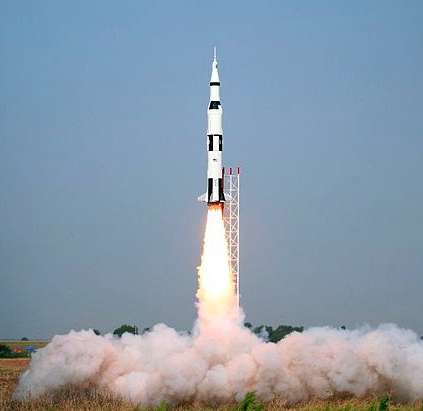
Machine Overcoming Inertia
The first law of motion states that the heavier something is (more mass), the force required to change its direction, or get it to move if it is not moving, increases in proportion to its increase in mass.
In ‘dead things’ like automobiles, planes, trains, and boats, engines that contain chemical reactions produce force to overcome the inertia contained in their static forms. The larger the object, the more powerful the engine, until even giant objects the size of the space shuttle can be motivated to actually leave the earth itself.

Animal Overcoming Inertia
In ‘living things’ the stimulating force required to overcome inertia is often self-generated, arising from somewhere inside, and can be powerful enough to move a huge amount of physical mass. In this way a massive but hungry tiger may be enticed by food across a stream, while a lightweight and satiated housecat wouldn’t move a whisker. The ‘decision’ itself is catalytic, causing the increase in energy needed to overcome the animal’s tendency to stay put.

What Psychological Inertia Feels Like
In most of the animal kingdom it appears decisions are based on instinct and reflex. They are either moving their physical mass, or not. But in humans there is a further, critical process. It involves the addition of psychological mass, an increase in spiritual (non-physical) inertia that accompanies repeated feelings of guilt, embarrassment, shame, disgust, sadness, anxiety, and other heavy feelings that add ‘weight’ to the psyche.
Inertia is the name for the tendency of an object to resist any change in its state of motion or rest, unless acted upon by a great enough force. It is proportional to an object’s mass.
Imagine you are a ball, sitting on top of a Tee. You are in a state of resting inertia, and depending on your mass, you will resist an external force trying to get you to change your resting state.
If you don’t have much mass (like a Ping Pong ball) it won’t take much to move you, possibly just a breeze would do. If you have more mass (like a baseball) it would take a bat, swung with some force. Even more mass (like a cannon ball) will require a cannon, and a charge of dynamite to get you moving.
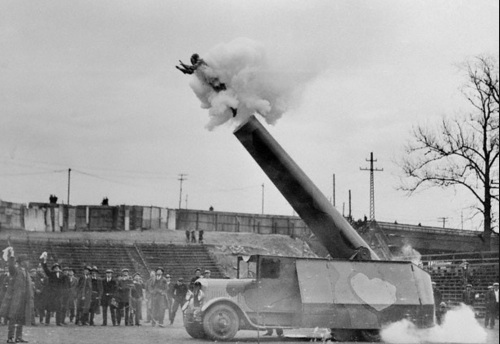
I Finally Found Something To Move Me
Overcoming inertia, correctly applied with the S.A.I.D. principle (see What Nature S.A.I.D part 2) explain almost all the techniques behind strength training. When your body runs up against a weight it can’t move either at all or for enough repetitions, it responds by adding muscular mass in order to generate more force, to overcome the added inertia of the heavier weight.
You wouldn’t question that, right? It’s an obvious enough wisdom for us to accept its application to these ‘dead’ things, objects made of paper, leather, or iron.
Physically we are made from similar stuff, exist in the same environment, and live under the same laws of Nature. Breeze, bat, or dynamite-charged cannon will move you from here to there, and how far that is will be depending on your physical mass and how much external force is applied. You’ll move whether you want to or not.
But what about psychological mass?

How Many Times?
Beneath your personal beliefs, cultural constructs, and things you hold dear, is the human body you were born into, a biologically adaptive organism, hardwired to survive in an unpredictable environment.
This hardwired aspect deals only in real data it gathers from your interaction with your environment, things like body temperature, breathing rate, pulse, metabolic rate, muscular strain, and hormone flow.
Using this data stream your body and brain are always trying to ‘guess’ what may be about to occur, based on the last thing that just did occur. It does this by making adjustments to your physical self in case what had occurred will occur again. It adapts, and over time , evolves.
But it makes the adaptations in a specific manner only, and only in relation to the demand you and the environment placed on it.
Run up one flight of stairs and your body will respond by elevating your heart rate and increasing your respiration rate, anticipating another flight while recovering from the past one.
Run up 25 flights of stairs, daily, and your body will increase your metabolic rate, shuffle nutrients into the muscles involved in the effort, increase the pumping volume of the left ventricle of your heart, and produce more endorphins, a group of hormones that interact with the opiate receptors in your brain to reduce your perception of pain and stress.
Your body will not adapt by increasing the size of your stomach, sharpen your eyesight, strengthen your shoulder muscles, or develop calluses on your hands. It only makes specific adaptations to the specific inputs you cause or allow.
You body is doing this all the time, awake and asleep, at work, and especially at rest. It is one of the fundamental physical processes that is always occurring inside you, without your permission or control.
It is the S.A.I.D. Principle.
Specific Adaptation to Imposed Demand
This picture below represents the way many people experience life, as a set of stairs that begin in childhood and lead on, up, and away from the starting point. How far you may choose to climb will be influenced by genetics, health, and circumstance.

This next represents the way addicts often experience life, as a set of steps that always return to the same point. Climbing these stairs enough can bring feelings of cynicism, resentment, impotency, anxiety, and paralysis.
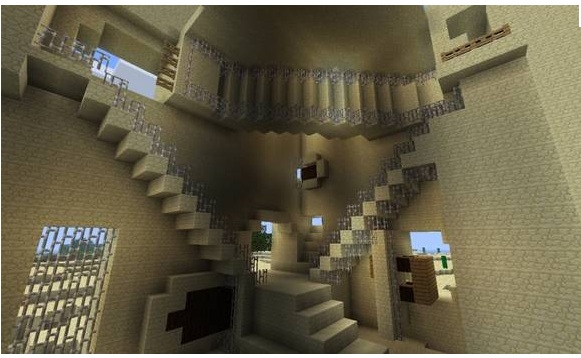
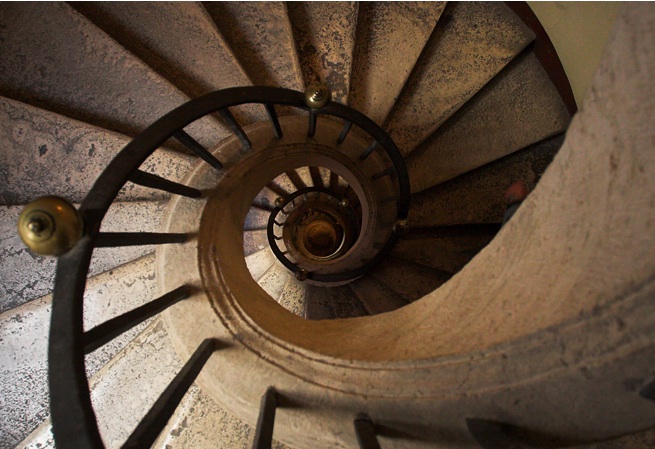
The third is the way people who have had a trauma or addiction to survive may experience life, as a set of stairs that spiral around a central point. The central aspects (trauma or addiction) never recede into the past like the bottom steps on the ‘normal’ stairs, but remain ‘alongside’ you as you climb.
.
Nowadays I keep to myself
Everybody else can look some other way
Things I say seem to get me into trouble
That I’ve been through for too many days
And trouble is a friend of mine
I’d like to leave behind
I like my friends more refined
Things I lose
Weighing on my heart
Every time I start to think
Maybe it’s through
A little lie
Goes a long way when you can’t say
Quite for sure what’s the truth
The truth is something no one really
Wants to hear you say
Just how you doin and have a nice day
Nowadays you go for a walk
Better not stop and wave or say hello
Just this song
People will spit, give you shit
Just for looking at them
And for walking too slow
Slowly and methodically
I’ll lock the world away
Haunted by my better days
Music and Lyrics by the Eels
Anyone who has had any kind of run-in with addiction knows that the idea of personal ‘free will’ is in most cases as substantial as smoke, blown downwind from a fire that has gone out.
Science has put the lie to it, showing us that the ‘you’ that decided to engage in behaviour that stimulated a change in your brain chemistry is literally no longer ‘there’. Your brain has been changed by the action itself (see Ghost and the Machine), and though you may have ‘freely’ chosen the action the initial few times, after that you’re playing follow the leader, and it’s your brain chemistry in front.
We are, belief systems aside, evolutionary individual organisms, being acted on outside of our ‘free will’ by much larger forces than we can control. Nature’s clock keeps time not in hours, or even stages of life, but in adaptations. This process is outside our overall control, but not outside our influence, or we wouldn’t be down here in this stuck place to begin with.
The same process that we engaged to dig this hole can be used to begin to tunnel out, using something called the S.A.I.D. principle.
 stormcrossing